
Bee Campus USA
June 22-28th 2026 is Pollinator Week!
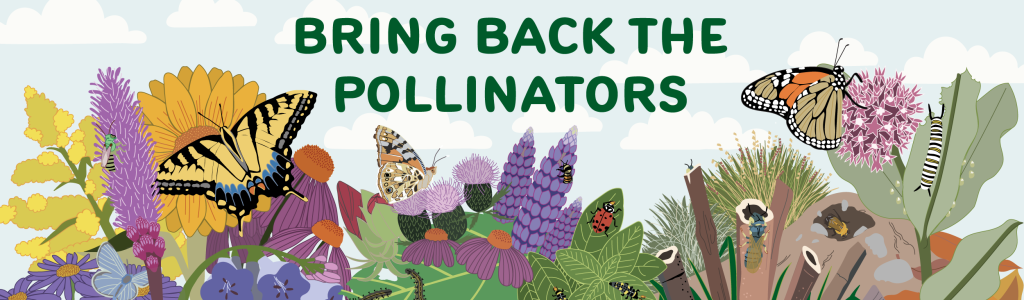
Illustrations by Maya Hutagalung and Madison Sankovitz (courtesy of The Xerces Society for Invertebrate Conservation).
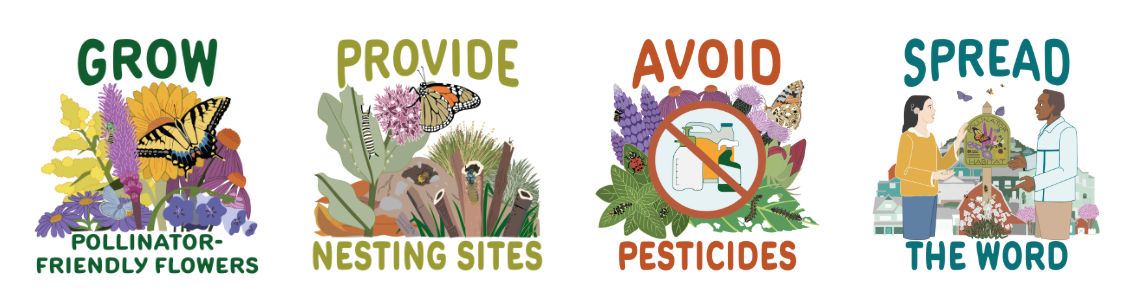
The four steps of the Bring Back the Pollinators pledge mirror the commitments of Bee City USA and Bee Campus USA. Below are the pledge steps with links to learn more:
1.
Flowers provide the nectar and pollen resources that pollinators feed on. Growing the right flowers, shrubs, and trees with overlapping bloom times will support pollinators from spring through fall.
2.
It is important to support all pollinator life stages, including eggs and larvae! For bees, leave patches of bare ground and brush piles, have plants and shrubs with hollow or pithy stems, or install nesting blocks. For butterflies and moths, plant their caterpillar host plants.
3.
Pesticides, especially insecticides, are harmful to pollinators. Herbicides reduce food sources by removing flowers from the landscape. Fungicides can also have negative effects on bees. There are safer ways to manage issues!
4.
Make your commitment both official and visible by signing the Pollinator Protection Pledge! You can also share information about pollinators on social media, talk with your neighbors, or spread the word with a pollinator habitat sign or pesticide-free sign.
萝莉社 is a Bee Campus USA Affiliate
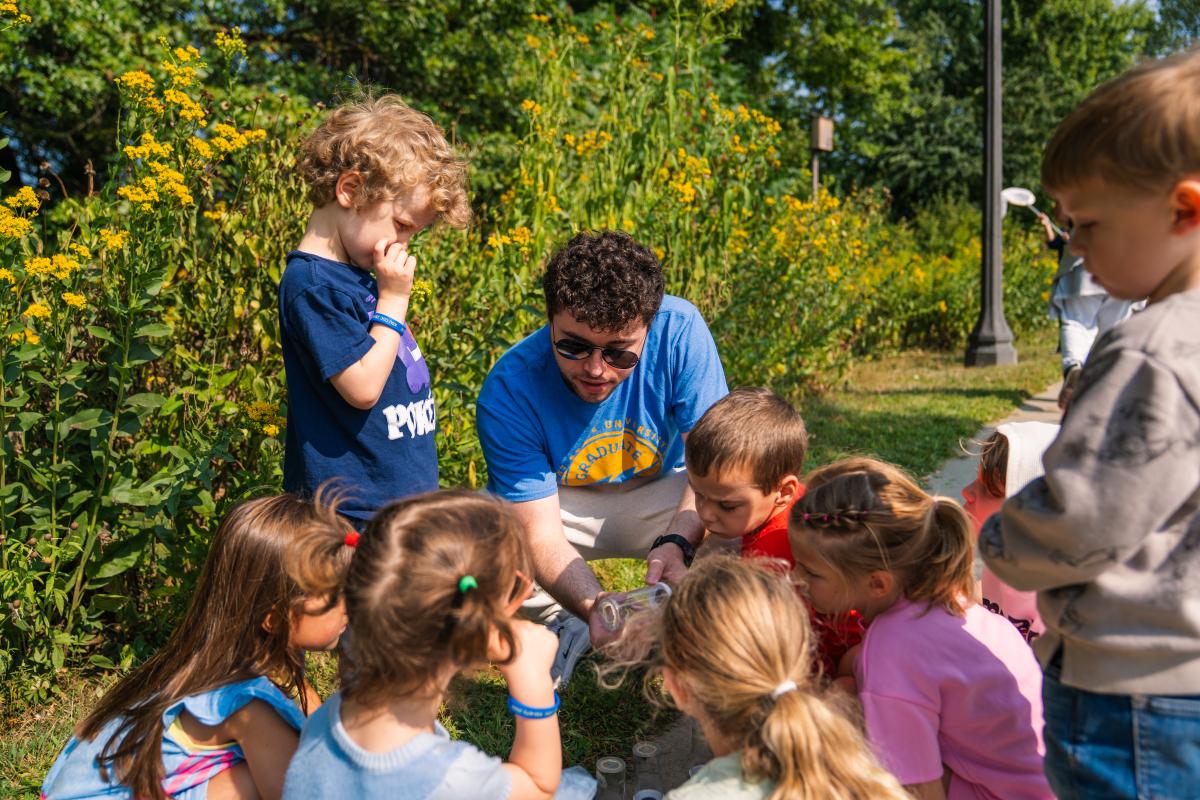
萝莉社's Kent Campus been a Bee Campus USA affiliate since December 2024!
is a program from the that recognizes, supports, and encourages pollinator conservation on college and university campuses.
The Xerces Society for Invertebrate Conservation is an international nonprofit organization that protects the natural world through the conservation of invertebrates and their habitats. Their key program areas are: pollinator conservation, endangered species conservation, and reducing pesticide use and impacts.
The Bee Campus USA committee at 萝莉社's Kent Campus is committing to:
1. Create and enhance pollinator habitat on campus by increasing the abundance of native plants and providing nest sites.
2. Reduce the use of pesticides.
3. Work with faculty to create courses or continuing education opportunities that incorporate pollinator conservation.
4. Offer service-learning projects to enhance pollinator habitat.
5. Display signage focused on pollinator conservation.
6. Maintain an online presence for Bee Campus USA activities - follow along here or on Instagram @esdri_ksu
Meet the Bee Campus USA Committee
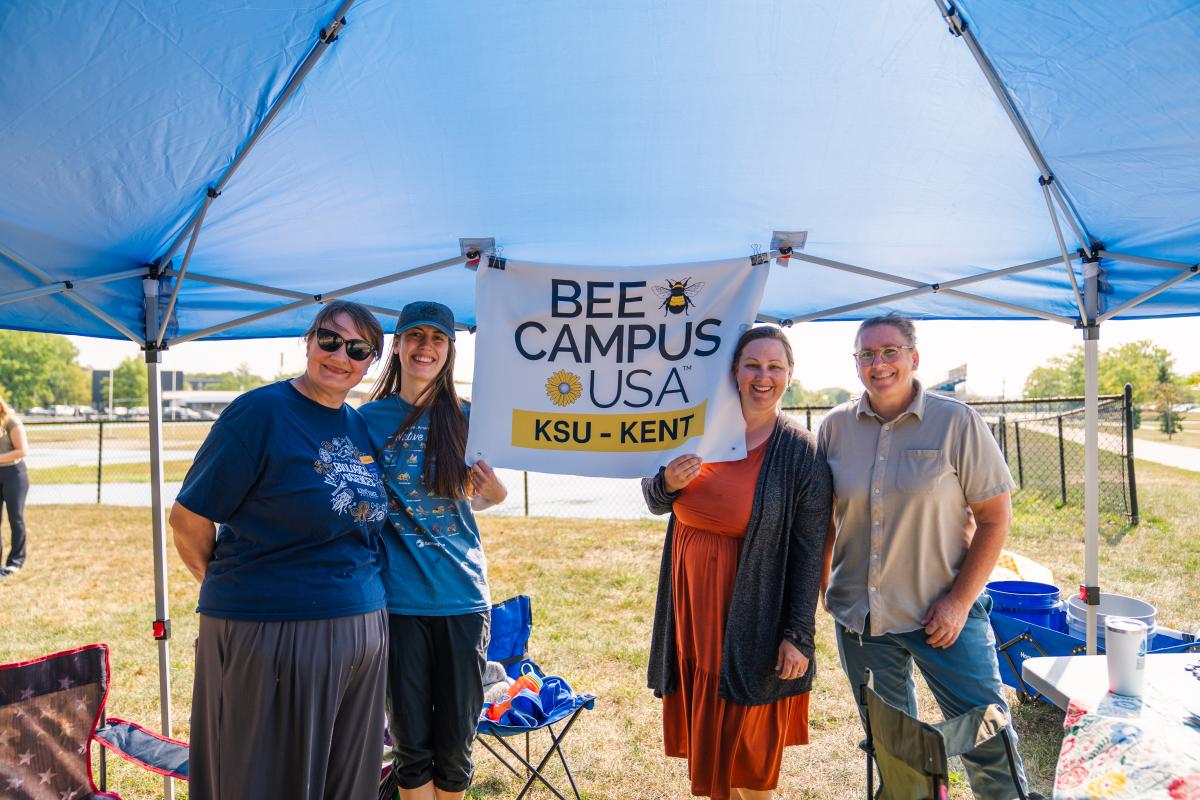
Co-Chairs
Christie Bahlai, PhD, Associate Professor, Department of Biological Sciences, and Co-Director, Environmental Science and Design Research Institute
Katie McNamara Manning, PhD, Postdoctoral Research Development Specialist, Environmental Science and Design Research Institute
Members
Bekkah Berryhill, Grounds Manager, University Facilities Management
Jeffrey Bittenbender, Project Manager II, Landscape Architect, Office of the University Architect
Leah Graham, Sustainability Coordinator, Office of Sustainability
Mackenzie Donahue, Earth Science Student
Elysian Cunningham, Language Arts Student
